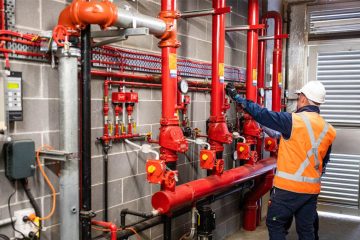
Construction and maintenance work can change a site quickly. A crew may begin welding in the morning, move to another area later, or leave materials close to a work zone. Temporary changes to fire protection can create another concern. In situations like these, Chicago fire watch guards can keep watch over areas where a fire could start or go unnoticed.
Hot Work Needs Extra Attention
Welding, cutting, grinding, and similar jobs can produce sparks and high heat. The person doing the work is focused on the task, while the fire watch can pay attention to the area around it.
That wider view matters.
A spark may travel through an opening in a wall or floor. Heat can also reach material that is not directly beside the worker. On an unfinished property, there may be spaces that are difficult to see from the main work area.
Before hot work begins, the people responsible for the site should identify the area that needs observation. The guard should know where the work is taking place and whether the crew moves during the shift.
If the work changes location, the fire watch needs to know about it.
The Coverage Area Should Be Clear
A guard cannot watch an area properly without knowing what is included in the assignment.
A short briefing before the shift can cover the main details:
| Information | Why it matters |
|---|---|
| Work location | Shows where activity is taking place |
| Coverage area | Defines where the guard needs to watch |
| Hot work | Identifies sources of heat and sparks |
| Combustible materials | Highlights areas needing attention |
| Site contact | Gives the guard someone to call |
| Emergency procedure | Explains what to do if a fire starts |
| Shift hours | Establishes when coverage is required |
The briefing does not have to be complicated. Clear instructions are easier to follow than a long list of information that does not relate to the actual assignment.
Why Regular Patrols Matter
Fire watch may involve regular patrols of the assigned area.
A patrol gives the guard an opportunity to notice changes that may not have been there earlier. A box of material could have been moved closer to a welding area. Another crew could have started work in an adjoining room. A temporary barrier might have blocked part of the original view.
The guard should pay attention to those details while moving through the property.
The right patrol routine depends on the site. A small work area may need limited coverage, while a larger construction project can require attention across several sections.
There is no reason to use the same approach for every property.
When Fire Protection Is Temporarily Affected
Construction and maintenance sometimes interfere with normal fire protection.
A system may be undergoing repair, equipment may be temporarily unavailable, or part of a building may still be incomplete. The response to these conditions depends on the property and the requirements that apply.
In some situations, Chicago fire watch guards may provide additional observation while the temporary condition remains.
Fire watch is not a replacement for required fire protection. If a system has been taken out of service, restoring it remains important. The watch provides another layer of attention during the period when additional coverage is needed.
The site should also follow any instructions provided by the appropriate authority.
Fire Watch May Continue After Hot Work
The end of welding or cutting does not necessarily mean the fire risk has ended.
A surface can remain hot after the tools are switched off. A spark may also have landed somewhere that was difficult to see while the work was happening. In some cases, material can begin to smolder after the crew has left the immediate area.
Depending on the circumstances and applicable requirements, fire watch may need to continue after hot work has finished.
This quieter period is easy to overlook. Workers may assume the job is finished and begin cleaning up, while the person on watch continues checking for signs of trouble.
Keeping Records Can Help
Some fire watch assignments require records of patrols or other activity.
A basic record can show when the watch took place and which areas were checked. It may also document unusual conditions or incidents reported during the shift.
Useful details can include:
- Start and end time
- Patrol times, when required
- Areas checked
- Problems noticed
- Reports made
- Actions taken
The exact documentation depends on the assignment.
Records should support the work, not interfere with it. The main responsibility remains active observation of the property.
Fire watch is ultimately about attention. While workers concentrate on completing their jobs, someone remains focused on the possibility that a small fire hazard could develop into a much larger problem.